
Many parents assume baby teeth don’t need much attention because they eventually fall out—until a sudden toothache, swollen gum, or early cavity disrupts a child’s sleep, eating, or school routine. In reality, primary (baby) teeth hold space for permanent teeth, support clear speech, and help children chew nutritious foods comfortably.
At Archak Dental, pediatric dentistry focuses on gentle, unhurried care that helps children feel safe in the dental chair while giving parents practical tools to prevent decay before it starts.
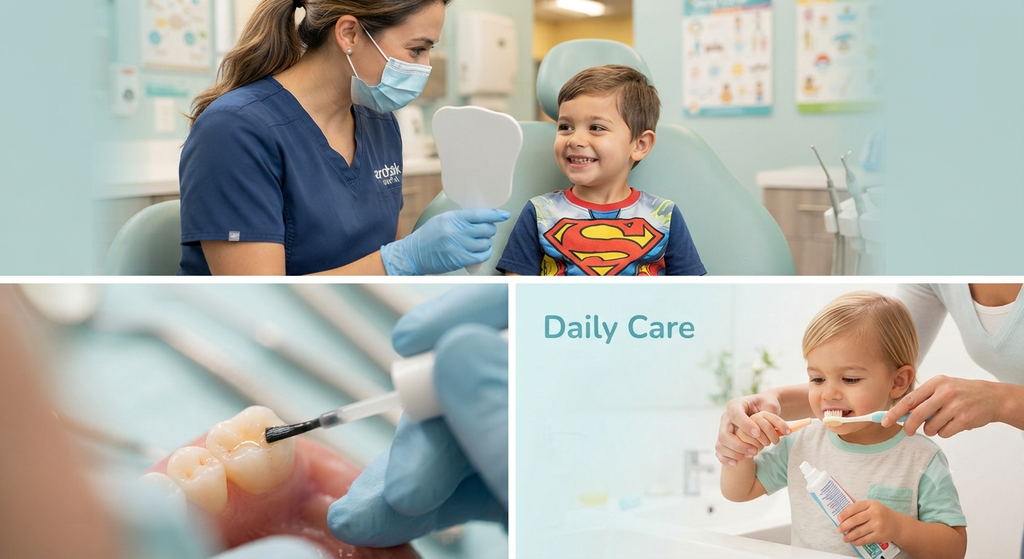
When Should Your Child Have Their First Dental Visit?
Dentists recommend scheduling your child’s first dental visit within six months of the first tooth erupting, or by their first birthday—whichever comes first.
Early visits aren’t about intimidating procedures; they are short, reassuring checkups designed to:
- Spot Early Decay & Enamel Changes: Catching white spots or early cavities before they reach deeper layers saves children from discomfort.
- Track Tooth & Jaw Growth: Monitor eruption timing, spacing, bite alignment, and early orthodontic signs as your child grows.
- Build Familiarity Without Fear: Positive early experiences help children view the dentist as a friendly helper rather than something to fear.
- Guide Parents at Home: Get age-specific advice on brushing, toothpaste amounts, feeding habits, and thumb-sucking or pacifier routines.
How Fluoride Treatments & Sealants Protect Growing Teeth
Even kids who brush daily can develop cavities because young enamel is thinner than adult enamel and back molars have deep grooves where food and bacteria hide. Preventive treatments at Archak Dental add an extra layer of defense tailored to your child’s cavity risk:
| Preventive Option | How It Works | Why It Helps Kids |
| Fluoride Varnish | Brushed quickly onto teeth to remineralize weakened enamel and resist acid attacks | Painless, takes only a few minutes, and strengthens enamel against cavities |
| Dental Sealants | Protective coating painted into the grooves of back molars | Blocks food particles and plaque from settling in hard-to-brush crevices |
| Routine Cleanings & Checkups | Gentle plaque/tartar removal plus developmental exams every 6 months | Keeps gums healthy and catches small issues early |
Everyday Cavity-Prevention Habits for Parents
Pairing in-clinic preventive care with simple daily routines at home goes a long way toward cavity-free checkups:
- Brush Twice a Day with Age-Right Fluoride Toothpaste: Supervise brushing until your child has the coordination to clean all surfaces well, and replace toothbrushes every three months.
- Watch Sticky & Sugary Snacks Between Meals: Frequent snacking on candies, biscuits, or sweet drinks feeds cavity-causing bacteria. Offer water, plain milk, fruits, and crunchy veggies instead.
- Make Nighttime Brushing Non-Negotiable: Saliva flow drops during sleep, making teeth more vulnerable overnight—avoid sugary drinks before bed after brushing.
- Don’t Wait on Pain or Swelling: If your child complains of tooth sensitivity, pain when chewing, or swelling around a tooth or gum, book a prompt evaluation.